Projects
Some of ifp's projects:
Avionics
- System analysis, implementation, testing and documentation of functions such as error routing, BITE
and military reconnaissance services in the onboard computers of the Airbus A320 and MRCA Tornado.

Litef GmbH, Freiburg
Graphical user interfaces
- Software emulators for graphical terminals under X11-OSF/Motif
Tektronix/Maho
- Visualisation of flexible manufacturing units over a service network that can be accessed by users
as well as control processes.
Gildemeister AG
- Development of graphical user interfaces based on incr Tcl for system and subscriber management
of a bleeper system.
ATM Computer GmbH
Warehouse technology
- Logistical analysis for throughput optimisation in block and high-stacking warehouses. Linkup with
Informix database.
Hugo Fritschi AG
Measurement technology
- Real-time measurement recording and evaluation for automatic adjustment of car doors in bodywork.
RdA/BMW
Process management technology
- From order management to control of units such as lathes, turning stations etc. In flexible manufacturing
units.
GrundigNumeric GmbH
- Process management technology for sheet metal processing manufacturing units with the tool 'FactoryLink'
C. Behrens AG
Simulation and training facilities
- Multiple-processor technology, from spread real-time database for the simulation of ships to drive units.

mtu-Friedrichshafen
Security Gate
- Collaboration in the development of a security gate based on COTS products in the context of a secure
mailing system part of the X.400 protocol series. Implementation of new concepts for the display of security
loopholes in tool based on SNMP.

ATM Computer GmbH, Constance
Simulation of a monitoring interface
- Development of a monitoring interface between a monitoring computer and an electronic controller,
supervision and regulation unit for the supervision of engines. Sensor values defined and stored in a
real-time database are transferred both on demand as well as cyclically. The monitoring interface was
developed as a DLL in Visual C++ using STL and MFCs.

mtu-Friedrichshafen
Actuators for the paper industry
Interactive Lottery Terminals
- ifp implements the software for interactive Lottery terminals under Windows NT for the swiss lottery
corporations of central and western Swizerland. The software becomes implemented in C++ with Microsoft
Visual Studio 6 als development environment.

Wincor Nixdorf (Constance)
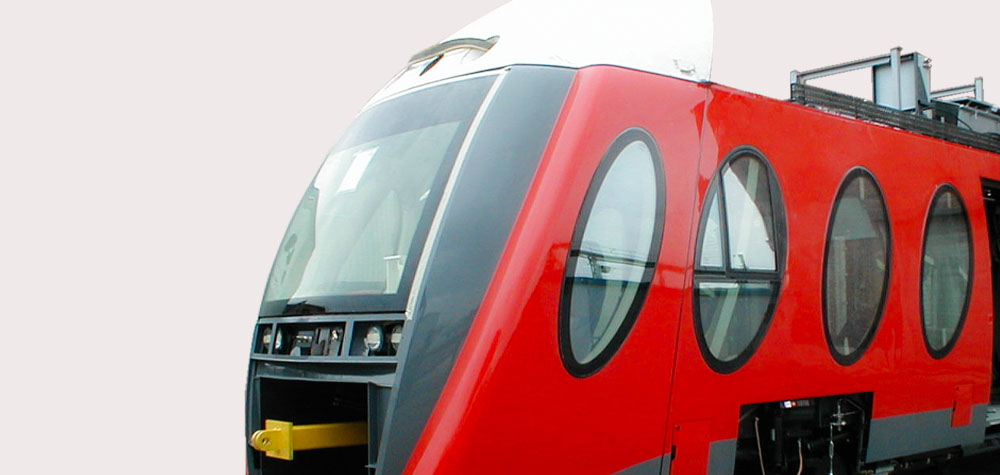
Control of Aircondition Devices
- ifp develops parts of the software for the control of the
aircondition devices for the german Intercity Express as
well as for the british train "Class 442". The software is realised in C under the realtime operation
system psos.

Liebherr Aerospace (Lindenberg)
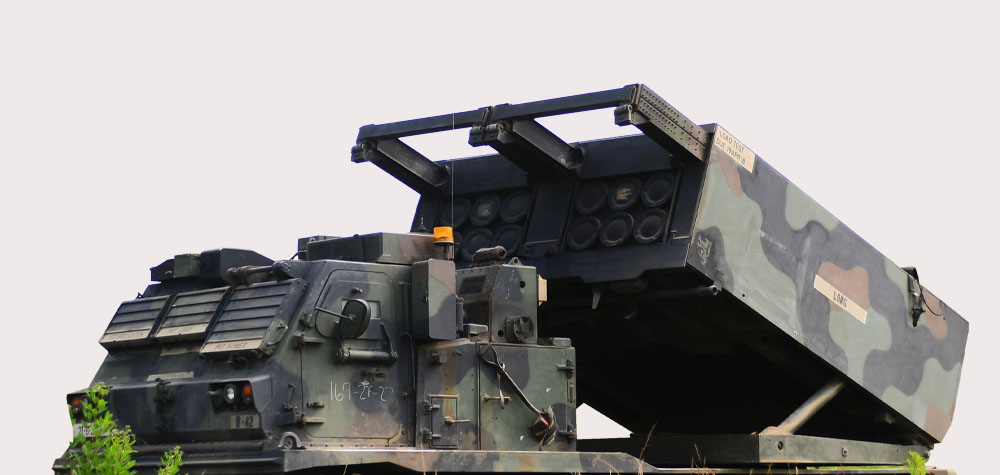
GMLRS European Fire Control System - Technical Demonstrator (MLRS-EFCS-TD)
- ifp developes the high-level software part for the Guided Multiple Launch Rocket System - MLRS-EFCS-TD's
Launcher Control Unit (LCU) using Embedded NT as a target platform. The LCU provides the interface between
weapon pods and the launcher drive system. The weapon system
will be able to launch GMLRS rockets. COTS products like CANopen are used and the implementation is performed
using C++ and CORBA. The control over the software life-cycle is carried out in accordance to MIL-Std
489.
Other companies involved are
- Vickers Defense Systems
- THOMSON-CSF/ITALIA
- THOMSON-CSF COMMUNICATIONS ad
- EADS Dornier

Krauss-Maffei Wegmann (Kassel)
CANopen Protocol Porting
- ifp is going to port the CANopen protocol on to the MC68376 (TOUCAN) as ordered by Liebherr Aerospace
/ Lindenberg (Germany). As IDE the TASKING 68xxx Compiler für Windows NT 4.0 as well as the CrossView
Pro Debugger is used. The targetsystem is the MicroC/OS-II real time kernel. The sources are obtained
from Vector Informatik GmbH, Stuttgart.

Liebherr Aerospace (Lindenberg)
MVB Bus Interface
- ifp realises the data transfer between the controls of the aircondition systems of a high speed
train by means of the MVB (Multifunction Vehicle Bus) interface under psos.

Liebherr Aerospace (Lindenberg)
Maintenance Tool in the Scope of a MIL Project
- ifp develops a maintenance tool in the scope of a MIL Project. It permits the visualisation of the
maintenance steps as well as the presentation of currently occured failures in the system. The test procedure,
the texts to be displayed and the activities that must be performed are contained in a SQL Server 2000
Database. The database access is realised by means of ADO (ActiveX Data Objects). The components are realised
as ActiveX components. The IDE used is Visual Studio 6 (Visual C++ und Visual Basic). The data from the
system are delivered via MIL Bus.

Krauss-Maffei-Wegmann, (Kassel)
Porting of CAN Functions
- ifp is contracted by MTU Friedrichshafen to port CAN functions of a CAN controller under Windows
3.1 onto a National Instruments controller under Windows 2000. The development platform is Visual
Studio 6.

mtu-Friedrichshafen
Load Torque Limitation System for Lifting Equipment
- ifp did the software development for a load torque limitation system to control
lifting equipments and avoid overloading by structural analysis. In case of overload the lifting equipment
(e.g.crane) must stop at some secure position. The system becomes developed according to IEC 61508. The
Failure Mode and Effects Analysis (FMEA)achieves a Safety Integration Level of 3 (SIL 3). The overloading
parameters (load, angle, cantilever beam extension) set up a set of tables building enveloping surfaces.
The movement of the lifting equipment must take place inside of this envelope. Further dynamical parameters
(velocity, accelleration etc.) will be used for the structural analysis. The system consists out of some
base module the software part of which will be deleloped by ifp, an operating facility with integrated
display, some key switch and signal horn. The display is connected by cable using the RS 232 (485) protocol.
The base module hardware becomes developed by
SET - Smart embedded Technologies, Wangen i.A.
.
EBM Brosa / Tettnang
Development of a Project Tool for CAN Applications
- ifp develops a Microsoft .NET based project tool for the simulation of a set of CAN modules. Starting
point is a xml-file upon which the tool will operate and will generate an xml project file by means of
xsl based rules. Additional project files will become generated to assure the downward compatibility.
Visual C#.NET will be used as IDE. XML and XSL files will be linked together by means of the DOM (Document
Object Model). A graphical front end allows to manipulate the project data.

mtu Friedrichshafen
Launcher Communication & Control System (LCCS)
- ifp is contracted by Thales Communications (Italy) to develop the highlevel software for the
Launcher Communication & Control System (LCCS) with QNX 6.3 as plattform. The LCCS is part of the European
Fire Control System (EFCS). It serves as interface between the headquaters the weapon pods and the launcher
drive system. The laying of the weapon is done via 2 encoders als CAN nodes. The aiming direction is calculated
using some attitude angles and is monitored. The hardware as a PC 104 stack containes the CPU board, a
CAN board with two channels, an RS 485 board as well as a peripheral board. Since the weapon system is
able to fire off GPS guided GMLRS (Guided Multiple Launch Rocket System) rockets the software must be
able to manage all relevant values from the GPS receiver like Almanac, Ephemeris etc. and transfer them
on time to the weapon. The communication protocol between the single CAN nodes and the CAN master is CANopen
The implementation is performed using C++ and QNX 6.3.
At Capo San Lorenzo on Sardegna the first successfull GMLRS rocket launch took place. The missile launched properly.


Thales Communications
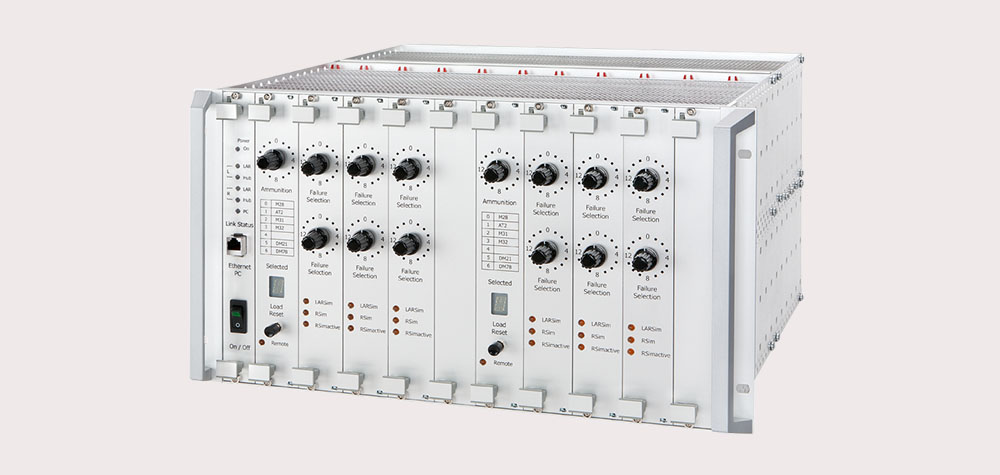
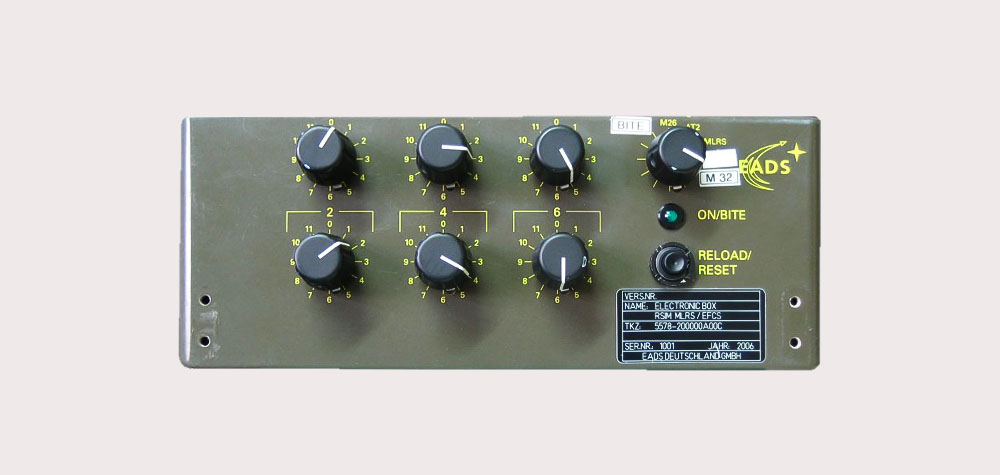
Tactical Rocket Simulator RSim for the launcher MLRS
-
ifp is contracted by EADS Dornier (Immenstaad)to develop the software for a tactical rocket simulator which simulates the rockets
carried by the MRLS launcher. This simulator supports the training of the launcher operation crew in the field. It can
simulate all launchable rocket types and can be projected by predefined failure patterns. The base hardware is an UNC 20 development board
manufactured by Forth Systems. The board containes an ARM7 core. The operation system TreadX / Net=S 6.0 is used here together
with a GNU toolchain (cygwin).
The configuration of the application is done via an integrated web server. Additional Mircrosoft application serve for debug purposes
and for the Launcher Contol Unit simulation.

EADS Dornier
Smart Ethernet HUB (eRSHub) for the Rocket Simulator RSim
-
ifp is contracted by EADS Dornier (Immenstaad) to develop an intelligent and flexible Ethernet HUB.
This HUB allows routing connections between the Launcher Control Unit for the
tactical rocket launcher MARS/MLRS and the rockets or the rocket simulator RSim.
The data traffic between the LCU and the rockets or the RSim can be traced by a monitor PC.
The route switching between the LCU and the rockets or the Simulator (RSim) is done by the monitor
PC using some special telegram.
The monitoring application running on the PC is realised by C# .NET.
The startup sequence of the rockets can be traced. The simulator mode allows dedicated failure patterns for the
rockets to be projected. As communication protocol between PC und simulator or rockets TCP/IP is used.

EADS Defence & Security
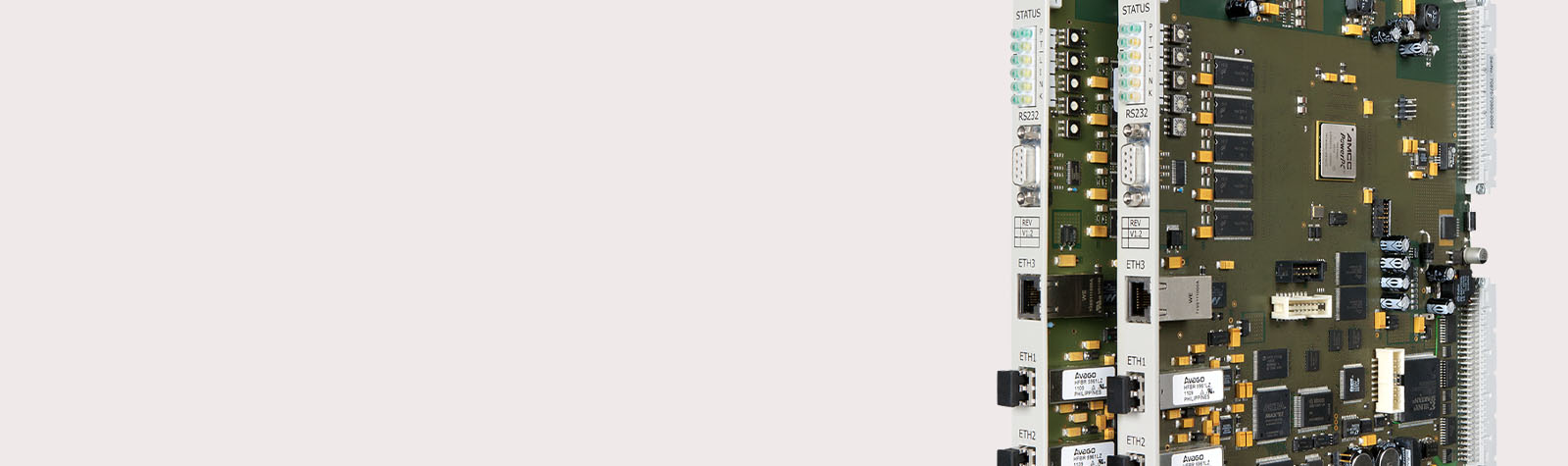
Interface board for a SCADA system used by the chemical industry
-
ifp is contracted by Invensys-Foxboro (Stuttgart) to develop an interface board used by a SCADA system for the chemical
industry. The board is designed to operate dual redundantly to grant a high availability regarding the the
chemical production processes. Hot Plug & Play capability without any failure of the hardware is required.
The board provides a profibus and some Invensys specific E/A bus. An AMCC Power PC 440 GX is used as CPU.
The operating system will be Linux together with the real time extension Xenomai. As development environment an Eclipse based solution for the Power PC is used.

Invensys
Projects made by our enineering partner Walter Stegmaier:
For the development of our hardware we rely on our engineering partner Walter Stegmaier.
Therefore we are glad to present here some of his engineering samples to make clear that we
supplement each other excellently.
-
Environment measuring technology, particularly for air pollution detection.
A commercially available PC/104-plug-in module upon its carrier module provides additional application specific resources.
This module is used as a master module for various air pollution analysers.
The module enables the communication with the user. Consecutive analysers are parametrised and supervised by the master module.
The values from all analysers are collected and stored.
Numerous interfaces serve to integrate the monitoring system into a superior environment as e.g. an online control via internet.
The application runs under LINUX.

-
Medicinal uses.
An active, PNP-enabled, PCI interface module using the signal processor TMS320 with its master functions.
Various external rcording modules daten together with the channel ID to the PCI module. The data are transfered
byteserial, bytewise or the burst mode is used.
A channel related ring buffer or change buffer management using vector base registers within the FPGA allows
a flexible and channel specific storage of the data.
The PCs memory is serves as storage media. Hereby a simple and efficient data transfer between the applications running
on the host PC, the indivually running applications and the external recording modules is accomplished.
The local signal processor is used for the digital signal preprocessing or the identification of particularly events
( trigger events ) within the individual channels.

|
|